Otherwise, please select your country so we can show you products & currency for your location
The content of our website is always available in English and partly in other languages. Choose your preferred language and we will show you the content in that language, if available.
This application note demonstrates how PIPETMAX® 268 and PIPETMAX® 278 workstations automate qPCR plate preparation to support consistent amplification efficiency, reliable standard curves, and reproducible Ct values across multiple gene targets. By reducing operator-dependent variability in critical pipetting steps, both systems deliver strong linearity and repeatable performance for accurate and efficient qPCR setup in low- and mid-throughput workflows.
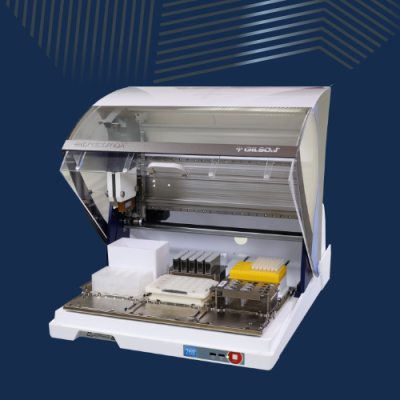
This application note demonstrates the use of EXTRACTMAX™ for fully automated magnetic bead–based purification of proteins, with a focus on preserving weak and transient protein–protein interactions. Using Gilson’s exclusion-based sample preparation (ESP™) technology, EXTRACTMAX gently transfers magnetic beads through multiple wash steps without centrifugation or harsh aspiration. The study highlights reproducible protein recovery, minimal sample loss, and parallel processing of up to four samples, illustrating how EXTRACTMAX supports reliable and automated magnetic purification workflows.
Pipette tips play a critical role in liquid handling accuracy and reproducibility. Learn how tip quality, fit, and material impact experimental results across manual and automated workflows.
Choosing the right pipette tip is essential for accurate and reproducible laboratory results. Learn the four key factors to consider – materials, purity, fit, and traceability – when selecting pipette tips for your experiments.
What if automating ochratoxin A testing in wine could improve both efficiency and confidence? Learn how a validated, fully automated workflow using ASPEC® 271 and OCHRARHONE® WIDE AUTO columns ensures precise, reproducible results while minimizing operator variability.
This application note demonstrates how automated immunoaffinity cleanup enables reliable, reproducible quantification of ochratoxin A in cocoa by standardizing sample preparation and reducing variability. The validated workflow delivers high accuracy (80–110% recovery, ≤5% RSD) while improving efficiency and minimizing human error in food safety testing.
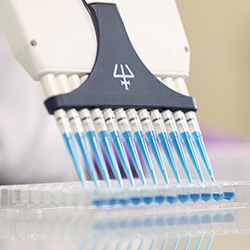
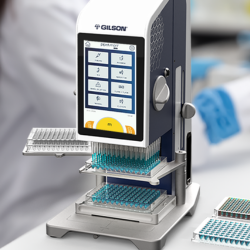
ELISA protocols rely on precise, repetitive pipetting steps that can quickly become time-consuming. This article explores how PIPETMAN® M96 enables simultaneous 96-well dispensing to streamline plate preparation, reduce variability, and cut pipetting time by up to 70%.
As global supply chains grow more complex, protecting food quality and reducing risk depends on reliable analytical methods and automated sample preparation solutions for a safe, sustainable food system. This article shows how techniques like SPE and IAC—especially when automated with ASPEC® systems—boost throughput, reduce variability, and deliver accurate, reproducible results across even the most challenging food matrices.
Processing thousands of wildlife samples for next-generation sequencing can overwhelm manual workflows. This case study shows how the Peery Wildlife Ecology and Conservation Lab automated key NGS steps with PIPETMAX® 268, reducing errors, doubling throughput, and enabling their team to scale conservation genomics research more efficiently.