Otherwise, please select your country so we can show you products & currency for your location
The content of our website is always available in English and partly in other languages. Choose your preferred language and we will show you the content in that language, if available.
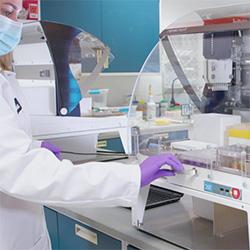
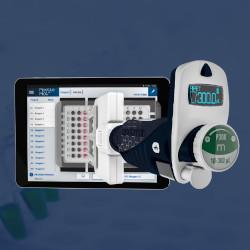
The quantitative polymerase chain reaction (qPCR) has transformed the world of molecular biology methodology by enabling fast, high-throughput detection and quantification of DNA and RNA in real time. PIPETMAX 268 is specifically designed to maximize reproducibility and accuracy in qPCR workflows. Here, we explore three ways that PIPETMAX 268 can help you run more effective and efficient experiments.
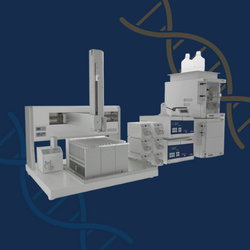
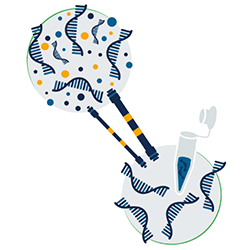
Custom manufactured oligonucleotides require additional purification steps after synthesis to separate the full-length product from failing sequences and small impurities. In this infographic, we highlight how to accelerate purification for enhanced productivity and scalability with automation.
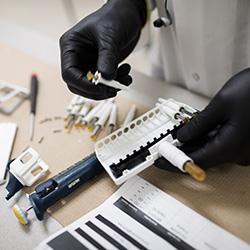
Pipettes are an essential tool in the laboratory, but their importance goes beyond just the simple transfer of liquids. In fact, pipettes are paramount to sample integrity and, therefore, the accuracy, reliability, and reproducibility of your results. A big part of that is upkeep and keeping them free from contaminants – learn more in this article.
Sample contamination is one of the biggest worries when it comes to sample integrity. It can occur at many stages of a laboratory’s operations, from sample collection, to transport, analysis, and storage. In this article, we explore the key drivers of contamination during pipetting, showing how the right tools and pipetting best practices help maximize sample integrity for consistent success.
Oligonucleotides, or oligos, are at the core of some of the most life-changing molecular biology tools used today. From qPCR to antisense gene therapy, oligos have changed what scientists can achieve through synthetic and molecular biology. While synthesis methods continue to advance, one significant challenge remains: oligo purification. Here, we explore the most common approaches to oligo purification, and explain how the right HPLC system can overcome any current and future challenges and help you achieve more accurate results.
qPCR plays a vital role in addressing today’s healthcare questions, with applications ranging from gene expression analysis to mutagenesis studies, and contamination is a significant concern. So, how can you ensure the integrity of your qPCR samples? This article explores where contamination arises from, and how to identify it. To improve sample integrity, we highlight approaches you can take to minimize contamination.
For an experiment to be valuable, it is vital that you trust your sample so you can be confident in the results obtained. Sample integrity refers to the quality and reliability of a given sample, but it stretches beyond what is in the sample itself. Making sure you have proper pipetting techniques can improve sample integrity, but workers are only as good as their tools. Pipettes must be properly serviced and repaired by experts to maintain confidence in your results. This article highlights what quality customer service involves and how it supports your sample integrity.
This article discusses how an automation platform can help you overcome critical challenges in creating optimized high-throughput assay workflows. We also explore options for incorporating them into your assay kits to minimize the burden and maximize time-to-market.
The University of Oxford reduces pipetting time by 75% with Gilson’s TRACKMAN® Connected system. Read more about their workflow and how they use connected tools to make their DNA normalization workflow more efficient.
Central Nervous System (CNS) depressants can introduce calm and induce sleep. Benzodiazepines are CNS depressants used to relieve anxiety, insomnia, and panic attacks. This application note discusses a simple SPE urine extraction before LC/MS-MS to confirm the presence of 15 spiked benzodiazepine analytes.