Otherwise, please select your country so we can show you products & currency for your location
The content of our website is always available in English and partly in other languages. Choose your preferred language and we will show you the content in that language, if available.
Peak-based fraction collection has the advantage that it’s based on real-time information. Your detector reveals a peak of interest, and the peak meets the criteria for collection. However, your molecules of interest are in the detector when you see the signal, and they need to pass through more tubing and parts before they can be collected. So how do you know when it is best to collect your sample? By knowing the fraction delay time.
Per- and polyfluoroalkyl substances (PFAS) are a group of synthetic compounds that have been widely used since the 1950s and are found in the environment and in the food supply. Because of the longevity of these chemicals, they pose a risk to human health through food and tap water consumption and other exposures. In order to understand the magnitude of the problem and to ultimately protect public health, regulatory agencies in various countries regularly detect and analyze PFAS in the food supply.
Peptides, or short chains of amino acids linked together by covalent bonds, are a growing class of pharmaceutical drugs. With a multitude of purification methods available for peptide purification, it’s possible to use several techniques together to enhance the purity of the peptide. This article covers the range of purification and detection methods used to purify peptides from process-related impurities and product-related impurities.
Post-extraction cleanup methods are commonly used in residue analysis workflows. The methods vary and the choice of method can depend on many circumstances: the type of sample, type of analyte, and regulatory requirements. This article focuses on two chromatography-based methods for post-extraction cleanup: gel permeation chromatography (GPC) and solid phase extraction (SPE).
Pharmaceutical peptides can be generated in a variety of ways. They can be generated by breaking down proteins to release peptides or they can be synthesized chemically, one amino acid at a time. This article covers synthetic peptide purification, focusing on purification by liquid chromatography-mass spectrometry (LC-MS).
Fractionation, or the separation of a mixture of molecules into different parts or “fractions,” helps scientists understand and/or use a complex solution. Collecting and isolating individual fractions from a mixture can enable many downstream applications as specific molecules can be separated based on physical and chemical properties. In this article, we explore the basics of fraction collection, including applications, parameters, and available solutions for your lab.
In this article, we provide an overview of GPC and how it’s used for post-extraction cleanup including: how GPC works, the components of a GPC system, and a step-by-step look into the GPC process
Oligonucleotides are core components of many molecular biology tools available today, including antisense gene therapy and primers for qPCR. Depending on the application, highly pure oligos are typically required, or experiments lack reproducibility — and for applications such as therapeutics, the consequences can be dire. To ensure that oligos are at the desired level of purity for their application, you need to use effective purification techniques. HPLC is one of the most effective and versatile approaches available for oligo purification, and in this article, we cover five tips to help improve your HPLC workflow to help you achieve highly pure oligos every time.
Synthetic oligonucleotides (oligos) are central to many cutting-edge biochemical applications across research and therapeutics. While solid-phase synthesis typically yields oligos with relatively high purity, they usually need further purification to avoid unintended side-reactions and interferences in downstream applications. Preparative HPLC is the preferred method for small to medium length oligos (10-60 bp). To increase productivity and maximize the profitability of your oligo research and development, finding the optimal LC purification platform is crucial.
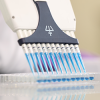
Sample integrity is vital for accurate, trustworthy results and it can be affected by all stages of liquid handling, from pipetting to transport. Taking actions to improve pipetting and pipette storage, the lab environment, and sample storage and transport can protect your sample integrity and give you trustworthy results – learn more here.